> For the complete documentation index, see [llms.txt](https://docs.odyssey.stream/llms.txt). Markdown versions of documentation pages are available by appending `.md` to page URLs; this page is available as [Markdown](https://docs.odyssey.stream/realtime-configurator/actor-importer.md).
# Actor importer
**Actor Importer** allows you define a library of blueprint actors from within your project that you can then import and place in your level during runtime.
## Enable Actor Importer
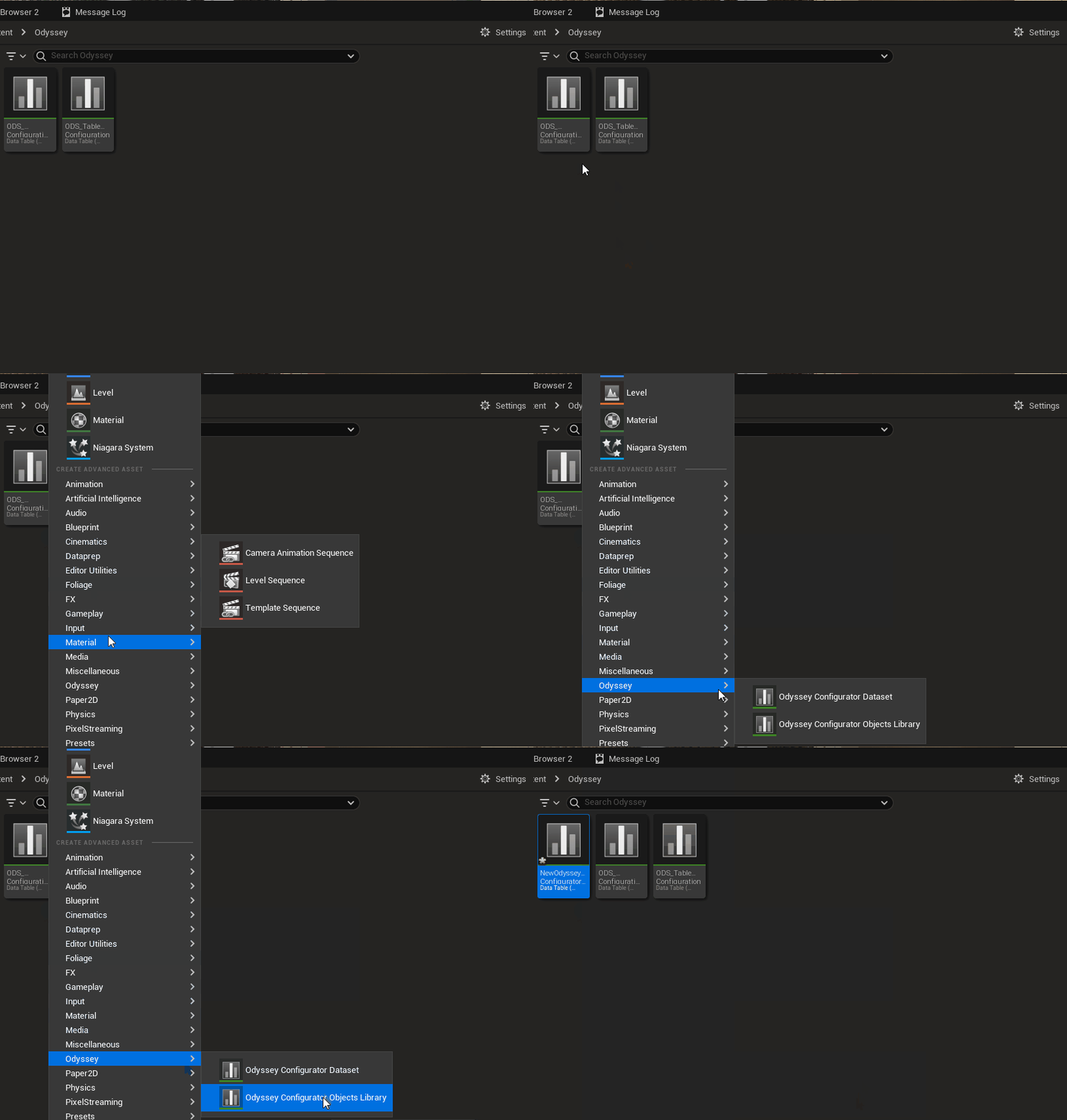
1. Create a new `Odyssey Configurator Objects Library` asset in your Content Browser.
2. Find the `OdysseyConfiguratorRegistryActor` instance in your main level (added in [Quickstart](/realtime-configurator/quickstart.md)). In the Details panel, under **Odyssey -> Configurator Objects Library,** add your Configurator Objects Library asset.
## Add an actor to your objects library
1. To create a new importable actor, create a new blueprint of class `OdysseyConfigurable.`
2. You can also reparent an existing blueprint class to `OdysseyConfigurable`.
{% hint style="warning" %}
Make sure the pivot of your custom actor is in the middle of its bounds, otherwise the runtime import drag functionality will break.
{% endhint %}
1. Open your `Odyssey Configurator Objects Library` asset.
2. Add new row (with the following `+Add` button) and select it:
7. Fill the row data:
1. Set `Configurable Actor Class` to your actor blueprint.
2. Set `Thumb` to a public image URL you want to show in the menu.
3. Set `Display Name` to the name you want to show in the menu.
8. :tada:You'll now see your actor when you navigate to your Realtime Configurator menu in your project space.